

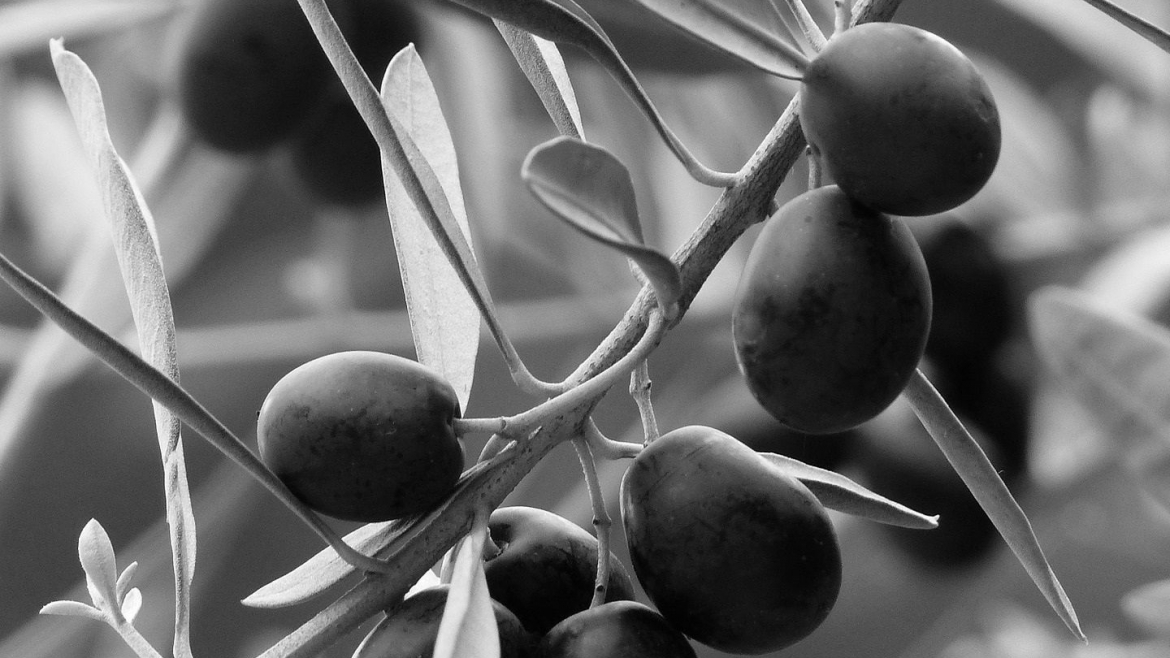
The olive tree (Olea europaea), part of the Oleaceae family, is a Mediterranean tree with an edible fruit. Its chromosome count is 2n=46. There are 27 genera and over 600 species in the Oleaceae family.
The olive tree usually grows at low altitudes. Olive agriculture is possible at up to 1000 metres above sea level. In Turkey, olive trees grow at 800 and even 1000 metres above sea level. Olive trees are especially fertile at below 400 metres. Environments which are warm during the summer and temperate during the winter are ideal for olive trees. The olive tree likes water but is also resistant to dehydration. Even though its fertility may vary, the olive tree will manage to adapt to its local climate.
This durable and easily reproducing tree can sprout and grow as a new tree from its lumps and roots, even if it’s felled and dried up. Its lumber is hard and strong. It is the most suitable tree to combat erosion. It is resistant to forest fires. Even burnt trees quickly sprout. The inside of older olive trees rot away with time. Because of this it is difficult to determine their age by counting their rings.
The height of the olive tree can go up to 10 metres. It has dense branches that are splayed wide. Young olive trees have wide, curvy, lumpy, and round single bodies. In some areas, there are trees that have three seperate bodies growing from a single root. The top part of the tree is splayed out further every year, by around the same amount as the tree’s height growth. The tree’s top can widen to cover an impressive amount of space. In fertile soil, the top of the tree is splayed wide and asymmetrical. In unfertile soil it’s dense and rounded. The sprouts are grey, thornless, and have about 3 corners.